I guess the first day in Panama should include my drive from Northern VA to Ohio the day prior. Since the University I work for is in Ohio, I had to join up with the students and other faculty to fly out of Dayton. Well that required a 500 mile trip with just me and Big Red. The old girl isn’t quite what she used to be but she’s still a solid machine after 10 years together! Thankfully my colleague offered to host me that evening since our flight was at 6am on Saturday!

We woke up Saturday morning (after only 4.5 hours of sleep) to some light snow. I’ve never been more grateful to be heading to 85+ degree weather. I’ve only met my colleague and the student’s via zoom so it was quite the experience to meet everyone bright eyed and bushy tailed at 4:30am in the Dayton airport for the first time.
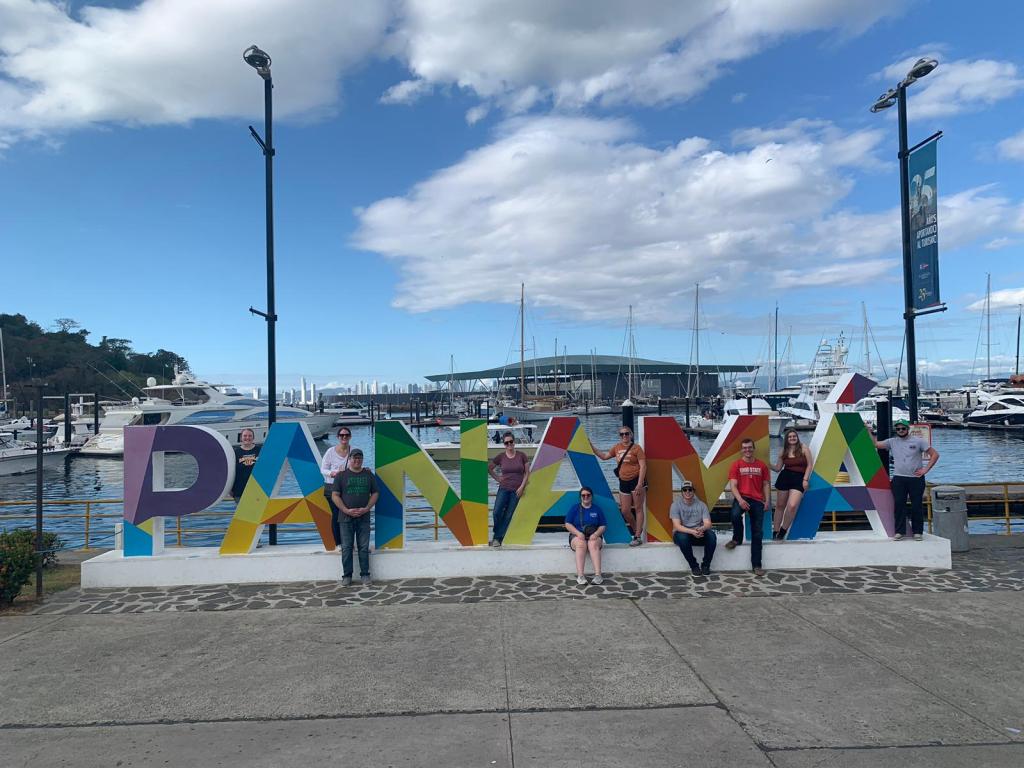
Flying to Panama wasn’t nearly the ordeal as I imagined it would be. Dayton > Atlanta > Panama City. We had a brief layover in Atlanta where I started to really get to know the students personalities and knew how much fun this experience was going to be. They reminded me so much of my days in undergrad and the ag friends that I had made

Once we landed in Panama you could feel the heat while waiting to deboard the plane (I wish I was more of a shorts person) but not much could prepare us for the intensity of the sun. Customs wasn’t that big of a deal and thankfully no one’s luggage got lost. Once outside, we met with our tour guide Kevin, an American native from Boston (although he’s hidden his accent fairly well). Kevin informed us that due to some events around the city the following day, we were going to swap our Day 1 & 2 itineraries to ensure we didn’t spend all of our time stuck in traffic. This meant that instead of heading to the hotel to change, we were heading straight the Amador Causeway to tour the Smithsonian Tropical Research Institute. While not ideal, since some of us weren’t quite dressed to adventure, it turned out to be very beneficial for the remainder of the trip.
The Causeway links 4 small islands outside of Panama City and was built using rock extracted during the excavations for the Panama Canal. During WWII, the islands were fortified to protect the canal but were never actually used. They housed a special ordered 16 inch gun that could fire up to ~22 miles. Although never actually fired, it was an impressive piece of artillery for the time.

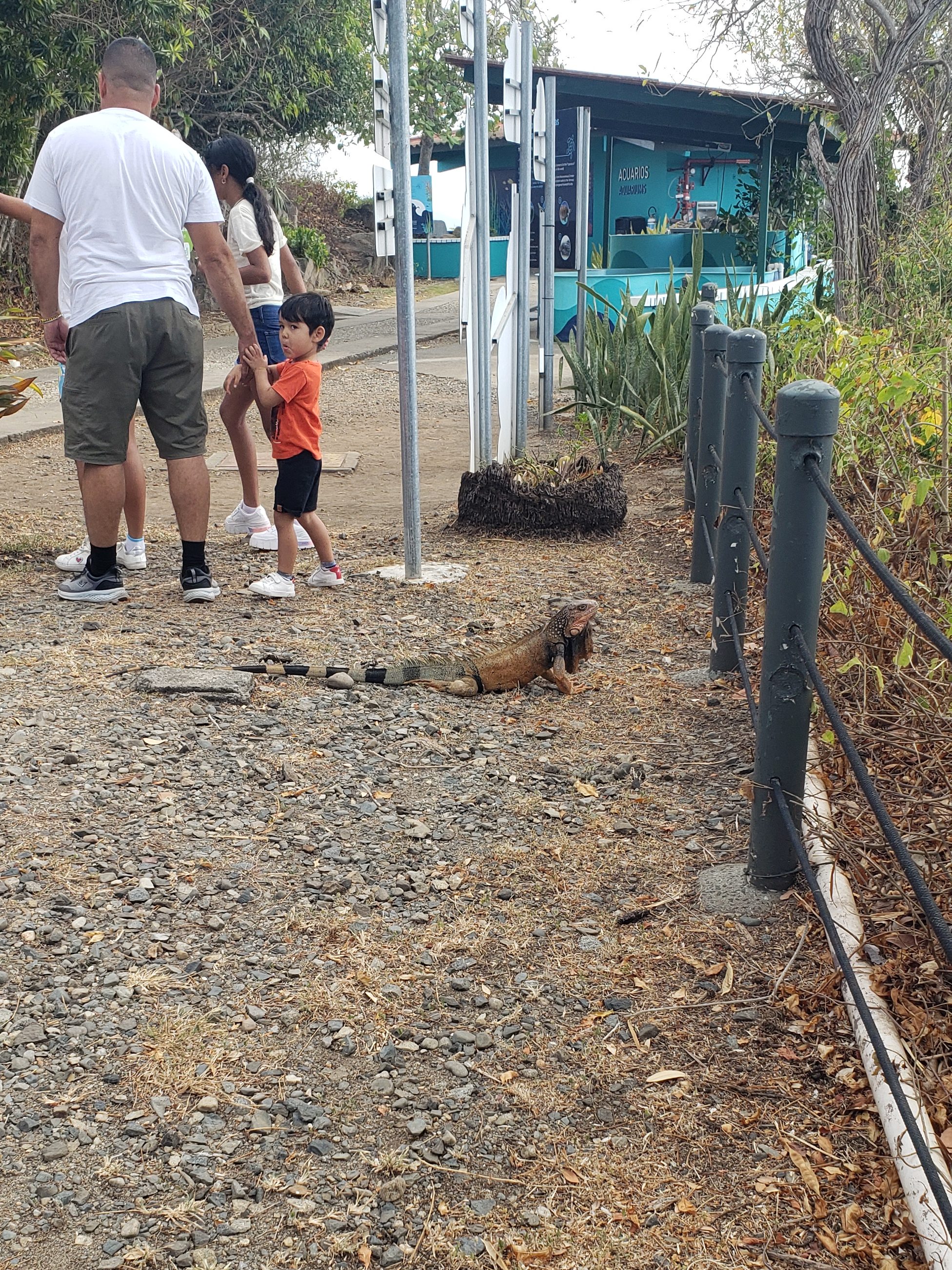
Visiting the Smithsonian was pretty neat. We were treated to seeing sloths lazily lounging in the trees. I learned they only come down once a week to defecate, which they actually bury like a cat. There was also giant lizards, birds, amphibian houses with endangered and poisonous frogs, and aquariums with turtles and tropical fish. The institute also researches crab activity on the beach where humans are prohibited from going. The Pacific side of the canal is important for whale populations and migration patterns and the Smithsonian has been important for creating traffic patterns to help ships away avoid collisions.
The hotel we stayed at was further in the city and was very nice. It was equipped with a washer and dryer (which would’ve been ideal on maybe day 5 and not day 1). The perks of being faculty is I didn’t have to share a room at any point, which was nice to be able to wind down. Getting to the hotel was quite interesting. We went from ghetto to the University to normal city blocks. An interesting decoration that the city has adopted (reminiscent of its time being occupied by the Americans) is the presence of razor wire everywhere.

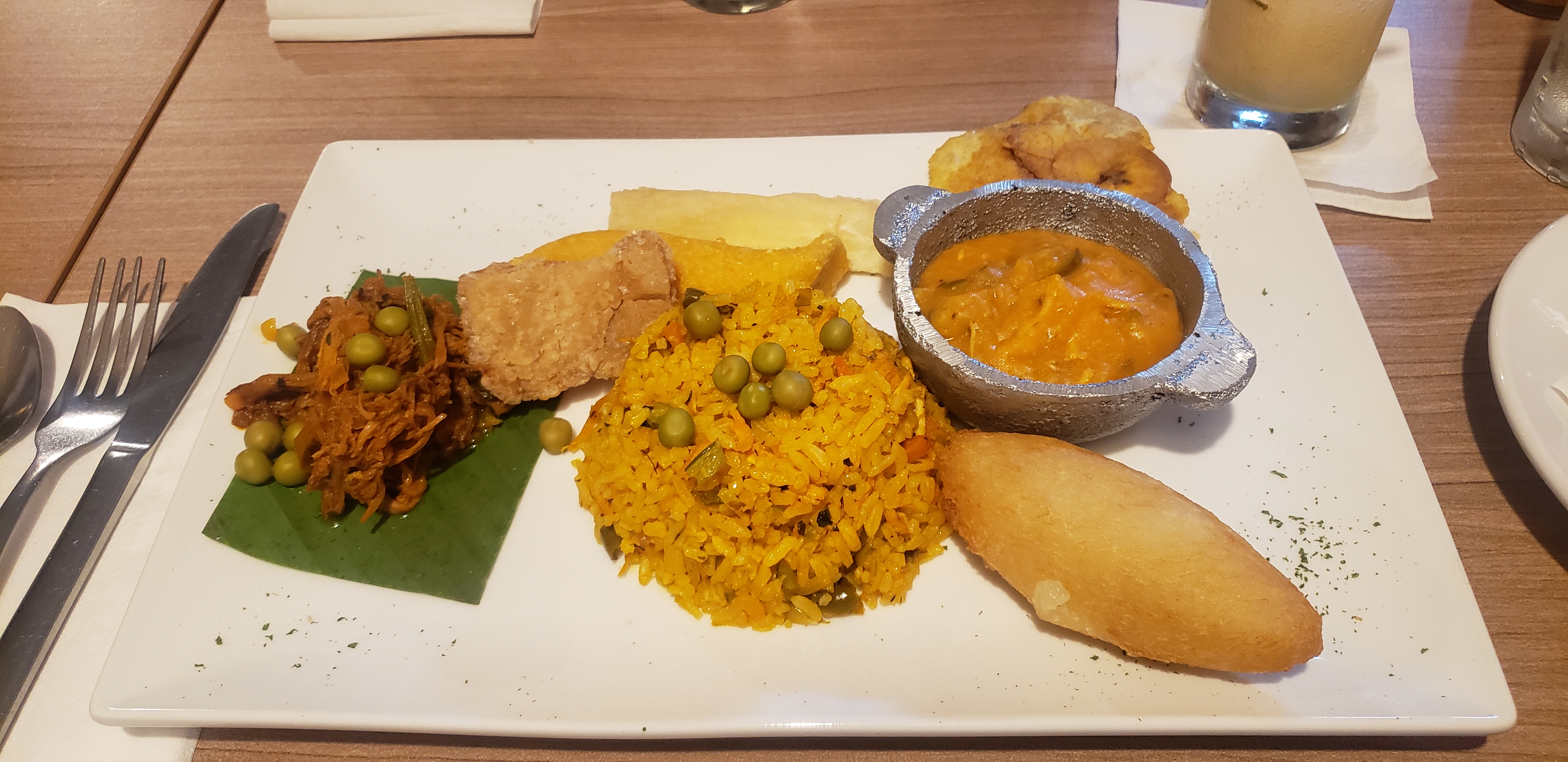
For dinner we were treated to a sampling of traditional Panamanian food and dancing. Some of the foods we tried were rice and chicken, a style of pulled pork, yucca, and fried plantains. I actually really enjoyed the food and didn’t find it to be spicy at all. The drink was a rum special and delicious!
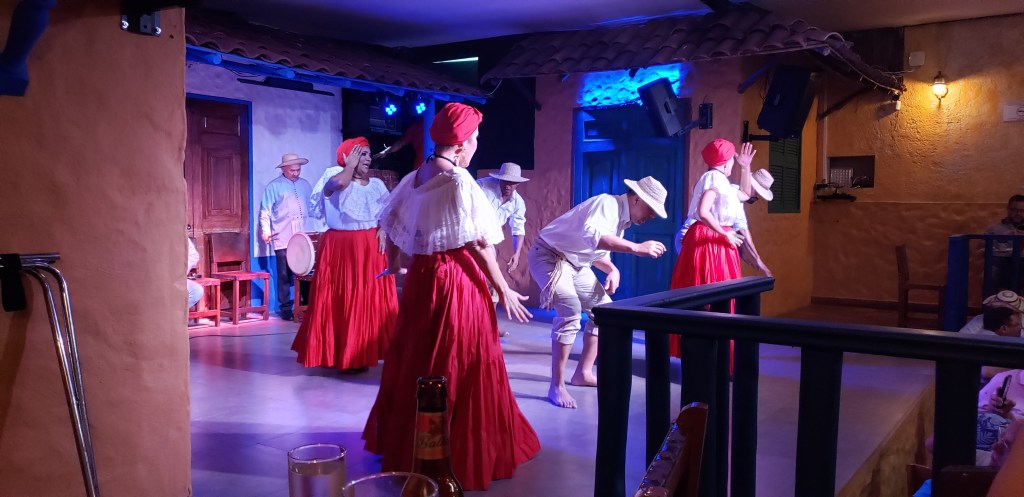
The dancing was loud and colorful and very entertaining. The first dancers displayed more traditional dancing that would’ve been typical among the common folk.

The men then dressed in special animal themed Diablico Sucio masks or “dirty devils”, and wore red and black striped outfits. Traditionally, the skin would be painted red and black and when they would sweat it would run, hence the name.
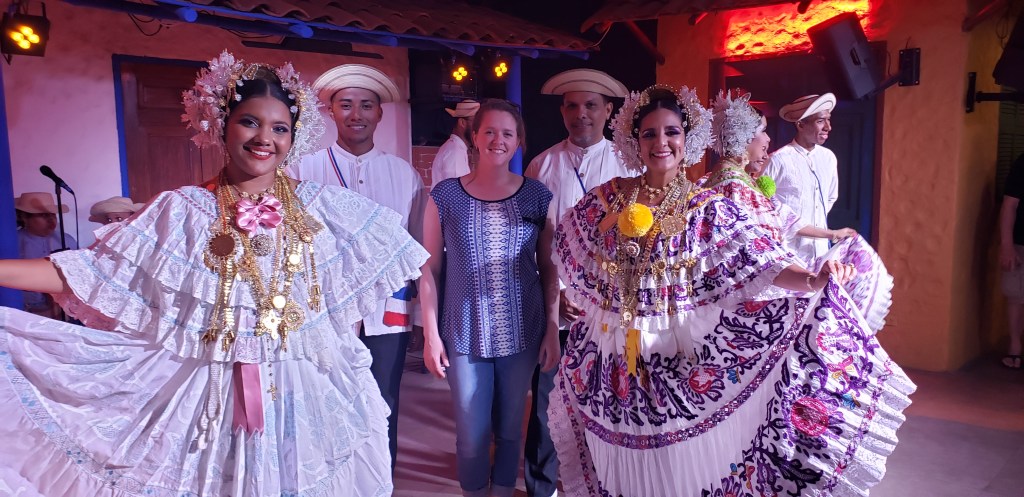
The final dance featured the pollera dresses, which are the traditional dress of Panama and are very special and unique such that no 2 are the same. The headpieces, or tembleques, they wear can cost upwards of $20,000. The outfit is completed with matching footwear and gold jewelry, often passed down from generation to generation. The women looked absolutely beautiful. It was such a fun treat to end the evening and our first day in Panama!

 My life in retrospect
Leave a comment